01 / Keep the conditions in view
Cooked chicken storage at a glance
That container at the back of the fridge is easier to deal with when you know when it was cooked. Start with the storage method, then consider everything that happened between cooking and putting it away.
| Storage method | Reference window | What matters |
|---|---|---|
| Refrigerator | 3–4 days | 40°F (4°C) or below; refrigerate promptly.[1] |
| Freezer | 2–6 monthsfor best quality | 0°F (−18°C) or below, kept continuously frozen.[2] |
| Room temperature | 2 hours maximum1 hour above 90°F / 32°C | Refrigerate promptly; discard if this limit is exceeded.[9] |
The freezer range follows FoodSafety.gov’s category for cooked meat or poultry leftovers. It describes quality, rather than a fixed safety expiration. Food kept continuously frozen at 0°F remains safe indefinitely, provided it was safe when frozen.[2]
These are guidelines for home leftovers, including cooked chicken pieces. Chicken salad also has a 3–4-day refrigerator period, but does not freeze well. Follow product-specific handling instructions where applicable.[2]
02 / Put it away well
How to store cooked chicken properly
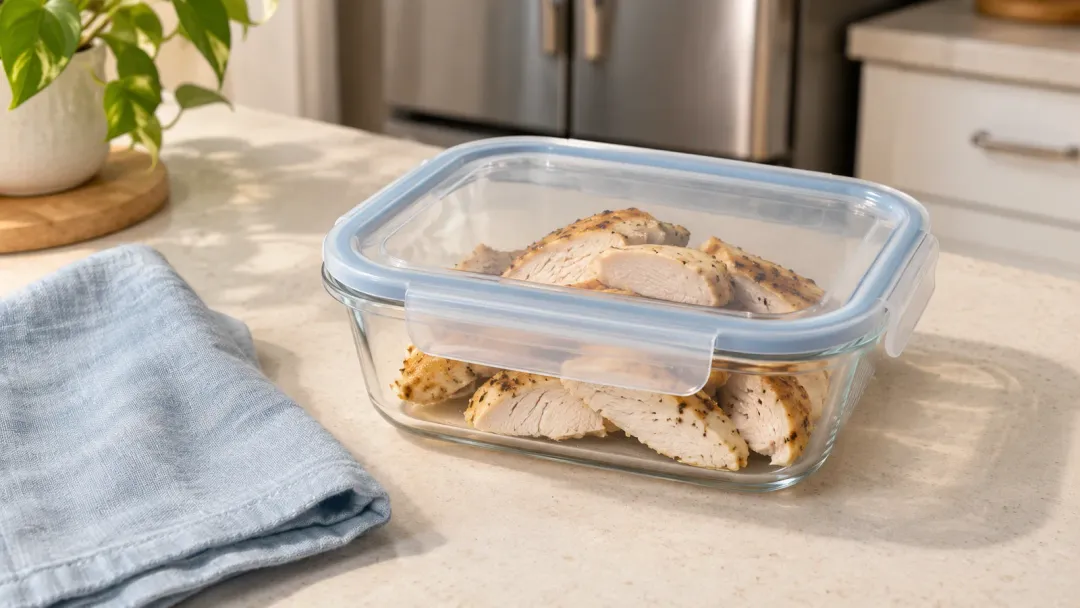
The first evening matters as much as the next few days. Make putting away leftovers part of clearing the table, rather than a task to remember later.
Refrigerate promptly
Get cooked chicken into the fridge within two hours, or within one hour when the surroundings are above 90°F (32°C). Count time during transport and serving, too.[9]
Divide it into small, shallow portions
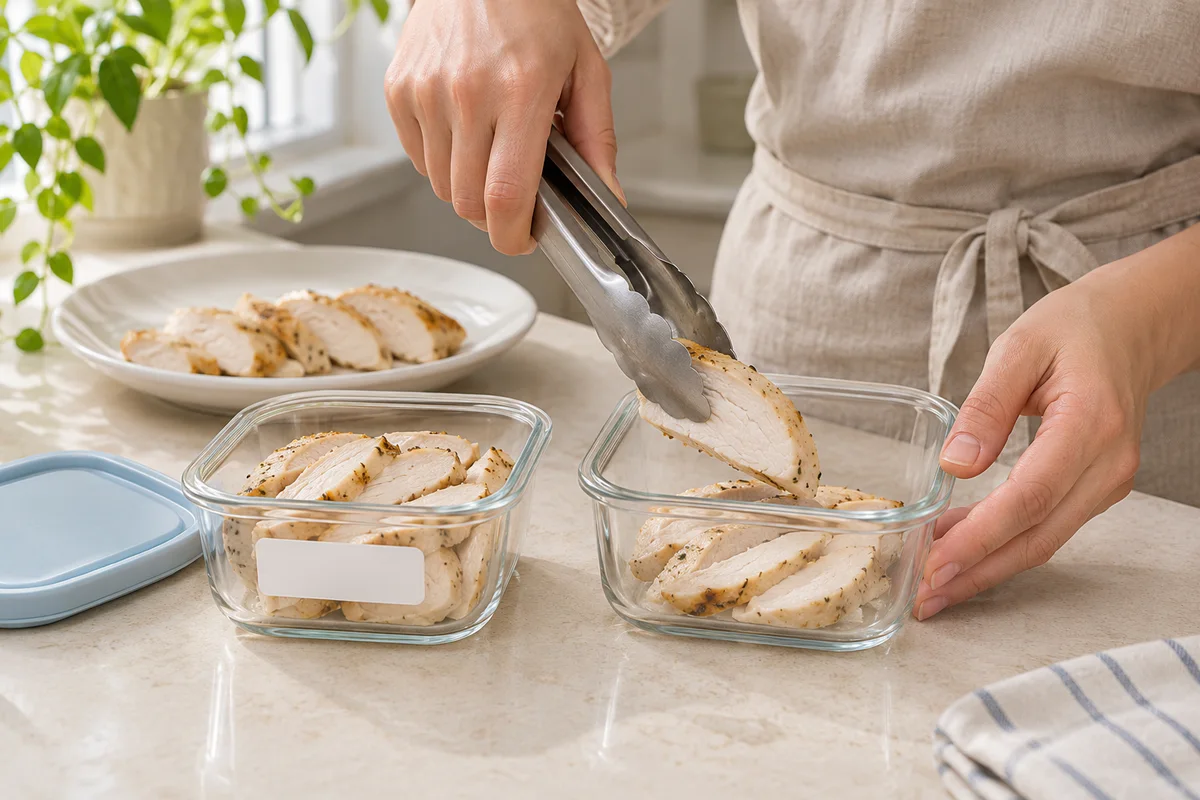
Cut up a whole bird or divide a large amount into smaller pieces. Small portions of hot food can go straight into the refrigerator; don’t wait until they have cooled completely on the counter.[4]
Cover the chicken and check the temperature
Use covered, shallow containers or suitable airtight wrapping. Keep the refrigerator at 40°F (4°C) or below, and check it with an appliance thermometer instead of guessing from the dial.[3][8]
Write down the cooking date
Put the date on the container before it goes in. For takeout, note when you brought it home and consider its earlier handling. Keep the label visible so the next person opening the fridge has the same information.
03 / When to let it go
Can you eat cooked chicken after 5 days?
Discard cooked chicken that has spent five days in the refrigerator. It is beyond USDA’s recommended 3–4-day period. Reheating is not a reason to keep refrigerated leftovers past that guidance.[1]
“It smells fine” isn’t a safety test.
Harmful bacteria may be present without a noticeable change in smell, appearance, or taste. Don’t take a small bite to check.[5]
An off smell, slime, visible mold, or obvious deterioration is a reason to throw chicken away. Their absence does not prove it is safe. If you don’t know how long it was out, when it was cooked, or whether the fridge stayed cold, don’t use the calendar to fill in the gaps.[5][8]
04 / Save a portion for later
Can you freeze cooked chicken?
Yes. Freeze properly handled cooked chicken within its refrigerator window if you won’t finish it in time.[1] A smaller portion is easier to use later than a frozen container big enough for several meals.
- Divide the chicken into meal-sized portions.
- Pack in freezer-safe containers or bags, removing excess air from bags.
- Label with the cooking date and the date you freeze it.
- Store at 0°F (−18°C) or below.[2][3]
For cooked meat or poultry leftovers, FoodSafety.gov lists 2–6 months for best frozen quality. Keeping a portion frozen does not reverse unsafe handling before it entered the freezer.[2][8]
05 / Ready for another meal
How to thaw and reheat cooked chicken
Thaw in the fridge, not on the counter
Refrigerator thawing keeps the chicken cold while it defrosts. Cold-water and microwave thawing are other safe methods when used correctly; food thawed by either faster method should be heated immediately. Never leave it on the counter to thaw.[7]
Reheat to 165°F (74°C)
Check the thickest part with a food thermometer. In the microwave, cover and rotate or stir as appropriate, allow standing time, and check several spots for uneven heating. Touching the outside cannot tell you the center temperature.[6]
Only reheat leftovers that were stored safely. Heating is a cooking step, not a way to rescue chicken that sat out too long.[8]
Check with a food thermometer when reheating.
Safe handling still comes first.
06 / Make the next check easier
Remember when the chicken was cooked
Knowing the guideline is one thing. Remembering which night you made dinner is another—especially when more than one person puts food away.
Try a small routine: label the container, keep leftovers together where you can see them, and decide at your next fridge check which portions you’ll use and which you’ll freeze. A phone reminder can prompt a check; it should not replace knowing the food’s storage history.
Cooked chicken
Cooked: [date + time]
Refrigerated promptly: [confirm]
Plan: use or freeze within the guidance
Food tracking with Frespace
Keep the next thing to use in view.
Frespace brings your food inventory and upcoming dates together. Review the details you add, keep reminders useful, and let everyone at home see what needs attention.
Explore date trackingEstimated dates and reminders cannot detect pathogens or guarantee that food is safe.
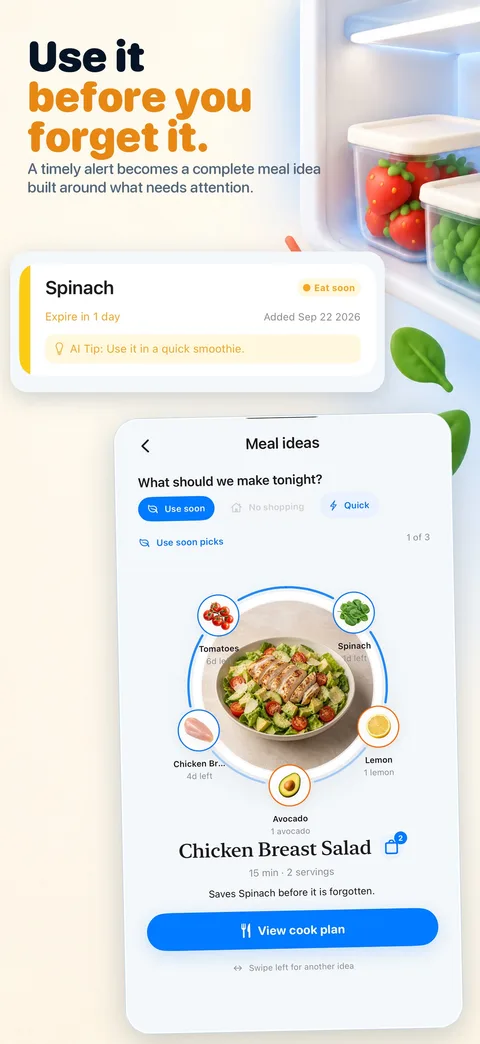 Frespace App Store preview.
Example food and dates.
07 / A few more answers
Common questions about cooked chicken
Is cooked chicken still good after 3 days?
Three days is within the usual refrigerator window if the chicken was fully cooked, chilled promptly, and kept at 40°F (4°C) or below. Consider its handling history as well as the date.[1]
How long does rotisserie chicken last in the fridge?
Plan to use properly handled rotisserie chicken within 3–4 days. Refrigerate it promptly after bringing it home, including time spent in transport and during serving when assessing how long it has been out.[3]
Does an airtight container make cooked chicken last longer?
A covered container helps protect food and retain moisture, but it does not extend the recommended 3–4-day refrigerator period. Packaging cannot make up for unsafe temperatures or delayed refrigeration.[3]
Should chicken cool completely before it goes in the fridge?
No. Small portions can go into the refrigerator while still hot. Divide a whole bird or a large amount into smaller pieces and shallow containers rather than leaving it on the counter to cool completely.[4]
Is raw chicken stored for the same amount of time?
No. USDA recommends cooking or freezing raw chicken within 1–2 days in the refrigerator. The 3–4-day guidance in this article is for chicken that has already been cooked.[1]
08 / Check the guidance
Sources & editorial notes
This guide uses U.S. home food-storage guidance. Sources were checked on . The recommendations assume safe preparation, prompt refrigeration, and continuous temperature control; they cannot assess the safety of a particular portion.
- USDA: Refrigerator storage times for chickenCooked chicken’s refrigerator window; raw and cooked chicken are different.
- FoodSafety.gov: Cold Food Storage ChartRefrigerator temperatures, freezer quality periods, and chicken salad.
- USDA: How to handle leftovers safelyPrompt refrigeration, shallow containers, and handling leftovers.
- USDA: Putting hot food in the refrigeratorCooling small portions without waiting for room temperature.
- USDA: Can bacteria grow in the refrigerator?Why smell and appearance cannot establish food safety.
- USDA: Safe methods of reheating food165°F reheating and even microwave heating.
- USDA: How to thaw food safelyRefrigerator, cold-water, and microwave thawing.
- FoodSafety.gov: Four steps to food safetySafe handling, temperature control, and food-safety basics.
- USDA: What is the Danger Zone?The two-hour rule and the one-hour rule above 90°F.
Our editorial policy explains how we choose and describe sources. Last updated November 3, 2026. Food images are AI-generated illustrations.